The way people look for information has changed a lot in 2026. Traditional search engines are no longer the place people look for answers. Millions of people now use AI assistants like ChatGPT, Google Gemini, Microsoft Copilot and Perplexity to get conversation-style answers instead of clicking through many search results.
This change has led to ways of optimizing content beyond regular search engine optimization. Companies now need to understand the difference between Search Engine Optimization, Answer Engine Optimization and Generative Engine Optimization to stay visible online. At the time AI SEO and AI-Powered SEO have become important for companies that want to rank in both regular search engines and AI-based platforms.
This guide explains the differences between Search Engine Optimization, Answer Engine Optimization and Generative Engine Optimization, why each's important and how you can create a strategy that is ready for the future.
What is Search Engine Optimization?
Search Engine Optimization is the process of improving a website so it ranks higher in search engines like Google and Bing. The goal is to increase traffic by making content relevant, helpful and technically optimized.
Traditional Search Engine Optimization focuses on:
* Keyword research
* High-quality content creation
* On-page optimization
* Internal linking
* Technical SEO
* Mobile optimization
* Fast page speed
* Quality backlinks
For years Search Engine Optimization has helped businesses get customers through search engine result pages. Even though Search Engine Optimization is still important in 2026 it is not enough on its own because users now want answers instead of looking through many websites.
What is Answer Engine Optimization?
Answer Engine Optimization is the practice of making content so that AI assistants voice search devices and search engines can quickly find and show answers to users.
Of just focusing on rankings Answer Engine Optimization focuses on giving clear and accurate answers to specific questions.
For instance when someone asks:
What is AI SEO?
An answer engine prefers reliable and organized content that answers the question in the first few sentences.
Answer Engine Optimization strategies include:
* Writing content that answers questions
* Using FAQ sections
* Creating definitions
* Adding structured data
* Optimizing for featured snippets
* Using language
As voice search and AI assistants keep growing Answer Engine Optimization has become an important part of modern digital marketing.
What is Generative Engine Optimization?
Generative Engine Optimization is the way of optimizing content specifically for AI-based search experiences. Generative AI platforms no longer just list web pages they create responses by combining information from many trusted sources. Generative Engine Optimization helps make sure your website is one of those trusted sources. Unlike Search Engine Optimization, Generative Engine Optimization focuses on making content clear, trustworthy and easy for AI models to use.
Important Generative Engine Optimization practices include:
* Publishing research
* Showing expertise
* Building authority on a topic
* Keeping facts accurate
* Creating guides
* Using headings and logical structure
* Adding citations and trustworthy references when needed
As AI-generated search keeps growing Generative Engine Optimization is becoming one of the useful long-term marketing strategies.
AI SEO: The Next Step in Search Optimization
AI SEO is the step in search optimization. Than just optimizing for Googles ranking system AI SEO considers how artificial intelligence understands content, context the relationships between topics and what users really need.
AI SEO focuses on:
* Optimizing for search
* Creating content based on entities
* Writing in language
* Building topic clusters
* Improving user experience
* Matching search intent
* Keeping content fresh
* Focusing on E-E-A-T (Experience, Expertise, Authoritativeness and Trustworthiness)
AI-powered search engines look at more than just keywords. They check if your content actually helps the user.
What is AI-Powered SEO?
AI-Powered SEO uses intelligence along with regular optimization methods to improve both content creation and search results.
Companies use AI tools to:
* Find keyword ideas
* Look at what competitorsre doing
* Create content plans
* Improve how easy content is to read
* Optimize metadata
* Find missing content
* Track rankings
* Predict search trends
However successful AI-Powered SEO does not depend completely on automation. Human knowledge is still important to make sure everything is correct original and reliable. The best results come from using AI tools and human knowledge
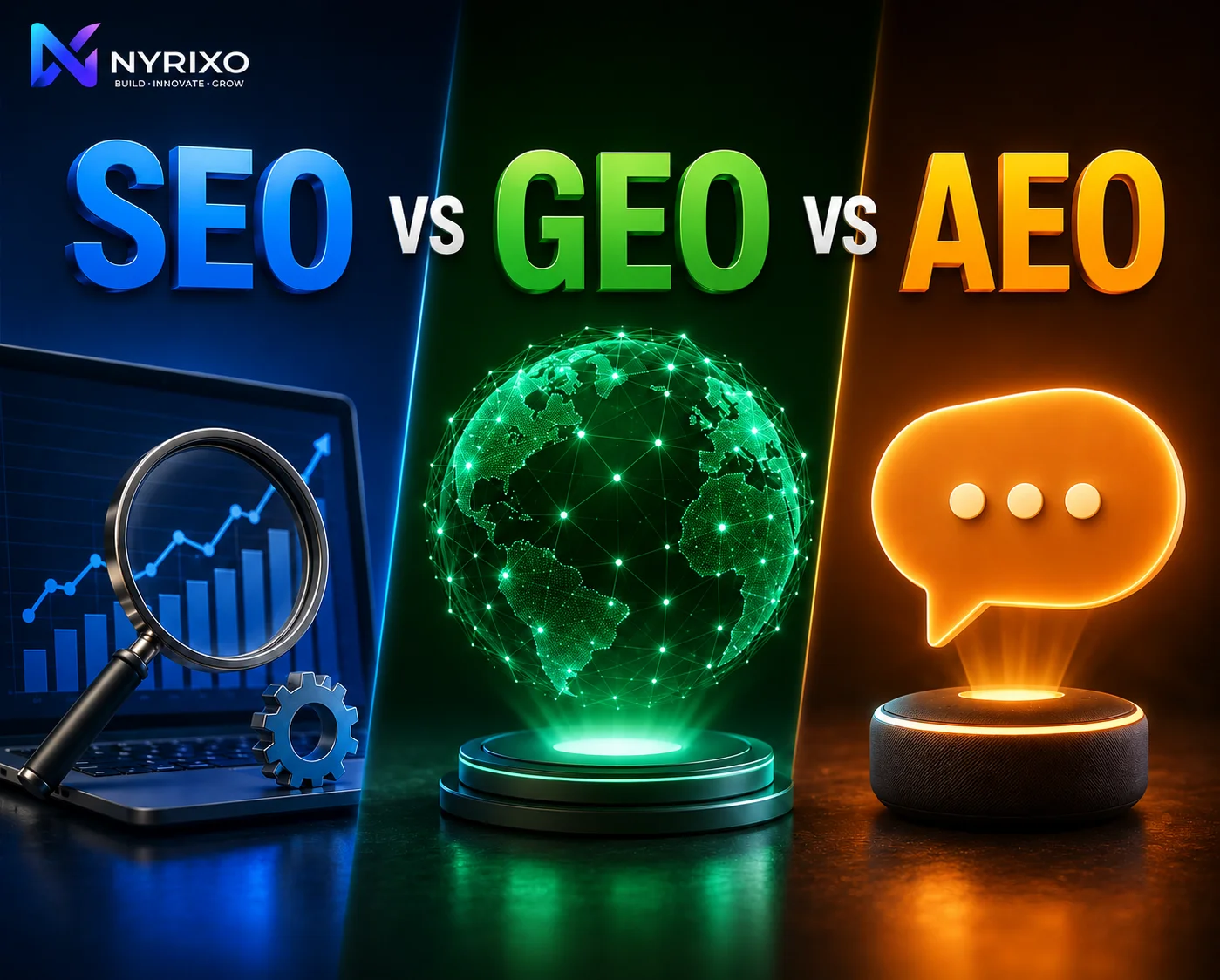
Search Engine Optimization versus Answer Engine Optimization versus Generative Engine Optimization: The Main Differences
Although these methods have some things in common each has a goal. Search Engine Optimization is about getting web pages to show up in search engine results. Answer Engine Optimization is about helping answer engines give direct answers.Generative Engine Optimization is about making sure AI systems use your content when creating responses.
Imagine it like this:
* Search Engine Optimization helps users find your website.
* Answer Engine Optimization helps users find your answers.
* Generative Engine Optimization helps AI systems trust. Use your knowledge.
The best digital marketing plan in 2026 uses all three approaches together.
Why Companies Need All Three
Peoples habits have changed a lot.
Some people still use Google.
Others use ChatGPT.
Some use voice assistants.
Many get answers from AI platforms before deciding.
If your website only focuses on Search Engine Optimization you could miss important chances to be seen on AI-based platforms.
By using Search Engine Optimization, Answer Engine Optimization and Generative Engine Optimization companies can:
* Get organic traffic
* Build trust in the brand
* Reach people who use AI search
* Get featured snippets
* Create long-term trust
* Make content easier to find
* Stay ahead as search changes
Best Tips for AI SEO in 2026
To do well with AI SEO focus on making value instead of just picking keywords.
Some proven tips include:
* Know what users are looking for before writing.
* Cover topics completely.
* Use headings.
* Write in a way that people like to read.
* Add FAQs when needed.
* Build topic clusters around subjects.
* Keep content updated
* Improve website speed and mobile access.
* Show your knowledge with ideas.
* Keep facts open.
These tips help your content be seen on both search engines and AI-based search experiences.
The Future of Search
Search is becoming like a conversation, more personal and more powered by AI. Of typing short words people now ask full questions and expect detailed answers. This means companies must stop focusing on keywords and start making helpful content.
The future is for brands that share information show they know what they're talking about and give clear answers that both people and AI can understand. Whether people find your business through Google Search, ChatGPT, Gemini, Perplexity or new AI platforms your content should be ready to help at every step.
Summary
The question is no longer Search Engine Optimization versus Answer Engine Optimization versus Generative Engine Optimization—the real chance is to use all three. Regular Search Engine Optimization is still the base for being seen in search. Answer Engine Optimization makes sure your content can answer users questions directly. Generative Engine Optimization makes your website a trusted source for AI-generated answers. By using AI SEO and making an AI- SEO plan companies can change with the new world of search reach more people through search engines and AI assistants and build long-lasting online presence. In 2026 and after success is for brands that make user-focused and honest content, for both people and smart search tools.